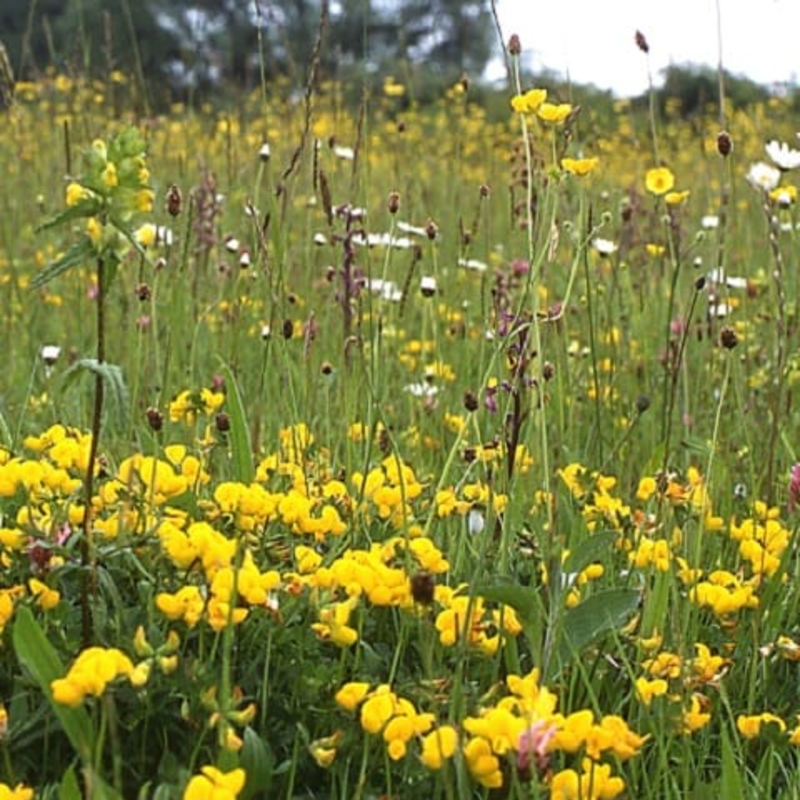
Dry, Sandy and Loam Soils Wildflower Seeds LW3P 100%
This selection of perennial UK native wildflowers contains species suited to dry, sandy and well-draining soils, with a particularly bright and summery range of colours. From buttercups to bedstraw and toadflax to trefoil seeds, this mix creates a permanent wildflower area with a golden glow.
- Contains 24 different native wildflower species
- Sowing Rate: 3 grams per sq/m
- 1kg covers 330sq/m
Mixture specifications, sowing instructions and maintenance can be found below
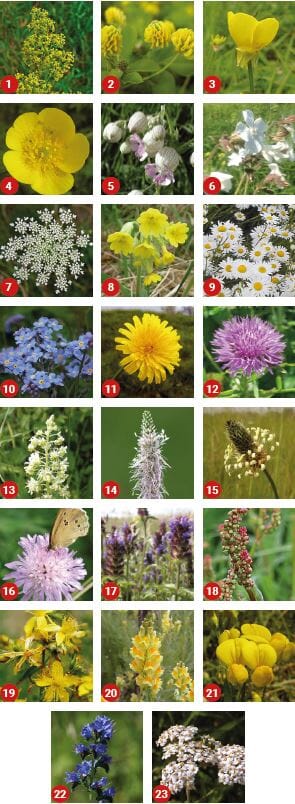
| Common Name | Latin Name | Quantity | Flowers | Height | Type | |
|---|---|---|---|---|---|---|
| 1 | Bedstraw, Lady's | Galium verum | 6% | Jun - Sep | 50 - 80cm | Perennial |
| 2 | Black Medick | Medicago lupulina | 8% | May - Oct | 15 - 80cm | Annual |
| 3 | Buttercup, Bulbous | Ranunculus bulbosus | 7% | May - Jun | 15 - 35cm | Perennial |
| 4 | Buttercup, Meadow | Ranunculus acris | 3% | May - Jun | 30 - 100cm | Perennial |
| 5 | Campion, Bladder | Silene vulgaris | 1% | May - Sep | 25 - 60cm | Perennial |
| 6 | Campion, White | Silene alba | 7% | May - Oct | 50 - 100cm | Perennial |
| 7 | Carrot, Wild | Daucus carota | 4% | Jun - Oct | 30 - 100cm | Perennial |
| 8 | Cowslip | Primula veris | 1% | Apr - May | 15 - 30cm | Perennial |
| 9 | Daisy, Ox-eye | Leucanthemum vulgare | 4% | May - Sep | 20 - 100cm | Perennial |
| 10 | Forget-me-not, Field | Myosotis arvensis | 1% | May - Jul | 20 - 40cm | Annual |
| 11 | Hawkbit, Rough | Leontodon hispidus | 3% | Jun - Oct | 15 - 35cm | Perennial |
| 12 | Knapweed, Common | Centaurea nigra | 7% | Jun - Sep | 30 - 80cm | Perennial |
| 13 | Mignonette, Wild | Reseda lutea | 4% | May - Oct | 30 - 80cm | Perennial |
| 14 | Plantain, Hoary | Plantago media | 3% | May - Sep | 15 - 45cm | Perennial |
| 15 | Plantain, Ribwort | Plantago lanceolata | 3% | Apr - Sep | 15 - 50cm | Perennial |
| 16 | Scabious, Field | Knautia arvensis | 3% | Jul - Sep | 30 - 200cm | Perennial |
| 17 | Self-heal | Prunella vulgaris | 6% | Jun - Sep | 15 - 30cm | Perennial |
| 18 | Sorrel, Common | Rumex acetosa | 5% | May - Jul | 30 - 100cm | Perennial |
| 19 | St John's-wort, Common | Hypericum perforatum | 2% | Jun - Sep | 30 - 90cm | Perennial |
| 20 | Toadflax, Common | Linaria vulgaris | 4% | Jun - Oct | 30 - 90cm | Perennial |
| 21 | Trefoil, Bird's-foot | Lotus corniculatus | 6% | Jun - Aug | 10 - 40cm | Perennial |
| 22 | Viper's Bugloss | Echium vulgare | 3% | May - Oct | 50 - 100cm | Biennial |
| 23 | Yarrow | Achillea millefolium | 5% | Jun - Oct | 20 - 100cm | Perennial |
| 24 | Yellow Oat-grass | Trisetum flavascens | 4% | Jun - Jul | 20 - 75cm | Grass |
Prepare the Ground
BS3P Dry & Sandy Loam Wildflower Seed Mix performs best in low nutrient soils, which haven’t been heavily fertilised in the past. For best results sow into bare soil after clearing all existing plants and weeds from the area.
Cultivate the ground to a depth of 10cm to relieve compaction and create a fine level tilth, free from obstructions (to allow for mowing at a later stage). Finish the seedbed by treading or lightly rolling the area, so that it is firm enough to stand on without leaving indentations.
Where weeds have been prevalent, allow a flush of weeds to germinate and remove these before sowing. In areas of high fertility, it may be necessary to remove the topsoil and sow into the subsoil. High nutrient soils encourage weeds and fast growing grasses which may outcompete the wildflowers in this mixture.
BS3P can be used to overseed into existing grassland, provided the sward comprises only fine leaved grasses and does not include ryegrass, agricultural species or weeds. Cut the grass as short as possible and thoroughly scarify or rake the ground to remove any thatch, moss and other debris from the area.
Sowing
BS3P should be sown between March and November. Spring and autumn provide ideal conditions as moisture and warmth are in good supply. If overseeding into grass, it is best to sow during autumn when grass growth has slowed down.
Distribute seed with a handheld or pedestrian spreader, at the recommended sowing rate of 3g/sqm. Mix the wildflower seeds with an inert carrier (such as sharp sand), at a ratio of four parts sand to one part seed (by weight). This makes it easier to achieve an even distribution and also provides a visual marker, making it easier to see any missed patches and avoid seeding areas twice.
Regularly mix the seed when sowing, as seeds will naturally separate due to
variations in size and weight.
Once sown, ensure good ‘seed to soil’ contact by lightly raking to a depth of 0.5cm or rolling the area. When overseeding this encourages the seeds to fall down to the ground underneath.
It is also possible to broadcast, drill or hydroseed this mixture for larger or hard to reach areas. However, broadcast spreading throws heavier seeds further so this may impact the distribution and when drilling, the seed must not be buried deeper than 0.7cm.
Sowing Rate
The sowing rate of 3g/sqm is designed to produce optimum results. Reducing the sowing rate is likely to result in invasion from weed species. Increasing the sowing rate generally leads to reduced diversity as the more aggressive species will outcompete slower growing plants.
This rate also applies when overseeding into grassland as many seeds may fail to germinate due to the increased competition from the existing grasses, and some seeds not reaching the soil surface.
First Year
Dry, Sandy and Loam Soils Wildflower Seeds contains mainly perennial species, which can be slow to establish and are unlikely to flower in the first year. Annual species such as Black Medick, Forget-Me-Not and Yellow Rattle will generally flower in year one.
During the first year remove any weeds which grow before they run to seed, either by topping, mowing or by hand for smaller areas. Weed growth is common due to the action
of disturbing the ground (rather than being caused by contaminated seed mixtures).
The area can be cut once the flowers have died back in the autumn.
We recommend leaving the area undisturbed for as long as possible, ideally until February / March (before the first spring growth). The dead flowers and stems provide a diverse environment which is a haven for wildlife through the winter months. In particular, it provides habitat for butterflies such as the Red Admiral and the Clouded Yellow which remain in their
chrysalis during the winter months.
Cut the area down to around 10cm using a scythe, strimmer or mower, leaving the cuttings for up to a week before removing. This will allow them to dry and shed seeds back into the soil.
Second Year
After twelve months the sward should be well established and requires little additional maintenance. Simply follow the same annual cut pattern (either in spring or autumn depending on your preference).
As an ongoing process, observe and remove any weeds which invade the area.
Over time, some species within the mixture may become more dominant due to environmental factors and natural selection. To encourage diversity, simply reduce the number of dominant plants in order to restore the balance.
Overseeding
If overseeding into grassland, we recommend incorporating at least two 10cm cuts each year; at the beginning of March and November. This reduces the grass canopy, allowing light and air to reach the wildflowers and encourage growth.
Where aggressive grasses are dominating, it may be necessary to employ a more regular cutting regime to ensure the wildflowers are not smothered.
Customers who bought this also bought:
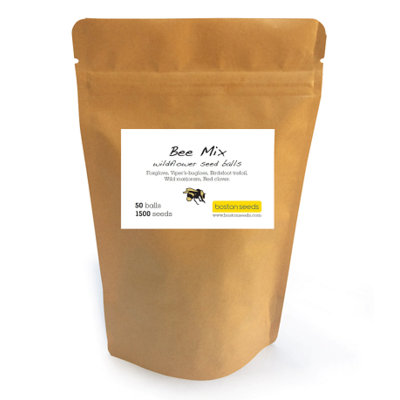
A mix of native wildflowers that the bees are bound to love! This carefully formulated mix includes selected species all recommended as bee-friendly plants by the Bumblebee Conservation Trust to attract solitary bees, honey bees and bumblebees; with an added splash of annuals for instant colour.
- Seed Mix including Birdsfoot Trefoil, Foxglove, Red Clover, Viper's Bugloss and Wild Marjoram
- Bes...
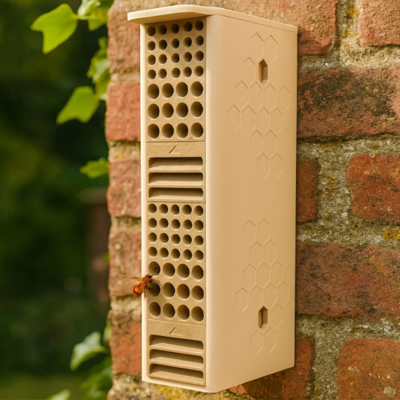
- Designed in Partnership with Buglife
- Eco-Friendly & Biodegradable
Support pollinators and wildlife with BugBlocks, a modular bug hotel designed in partnership with Buglife. This innovative bug hotel is made from eco-friendly, biodegradable materials with a blend of cornstarch PLA and recycled wood fibres. This not only reduces environmental impact but also ensures durability and weather resistance while retaining a natural, wood-like finish.
Each block is tail...
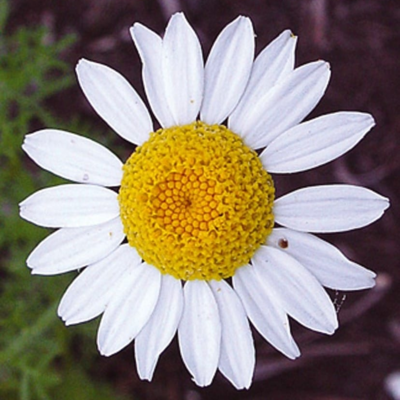
- White annual, flowers May-July.
- Pleasant, apple-like aroma.
The delightful white daisy flowers of this annual wildflower were once a common sight in cornfields. It is now much rarer due to the widespread use of selective herbicides. It has a compact upright habit, ideal for use on borders that will leave a strong, sweet scent similar to apples.
- Height: 20 - 30cm
- Flowers: May - July
- Soil Requirement: Well-drained
- Light Requirement: Full sun
- Seeds p...
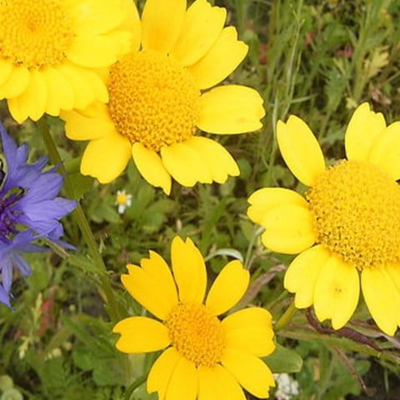
- Yellow annual, flowers June-Oct.
- Golden blooms, perfect as cut flowers.
Glorious annual wildflower seeds are very like a single Chrysanthemum. A fitting addition to beds and borders giving an understated delicious fragrance and can be used as cut flowers. Prolific in its production of wildflowers.
- Height: 15 - 45cm
- Flowers: June - October
- Soil Requirement: Well-drained
- Light Requirement: Full sun
- Seeds per gram: 400
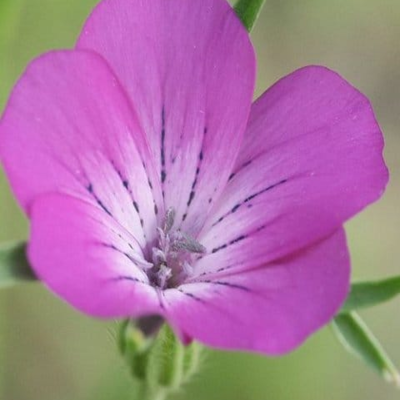
- Purple annual, flowers June-Aug.
- Large seeded and very easy to grow.
Once common in the cornfields of England, this wildflower has reddish-purple and solitary with undivided petals on a tall, furry stem. This wildflower seeds itself very prolifically and is related to other campions.
- Height: 60 - 120cm
- Flowers: June - August
- Soil Requirement: Sandy, well-drained
- Light Requirement: Full sun
- Seeds per gram: 80
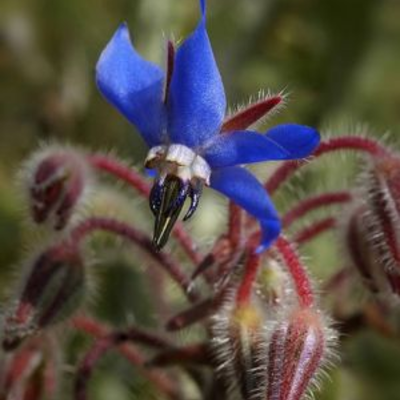
- Bright blue annual, flowers June-Sept.
- Easy to grow wildflower.
Borage is a strong, medium-height wildflower with bright blue flowers that attract masses of beneficial pollinators and insects. Commonly found in forest verges and natural meadows, Borage is an easy-to-grow annual.
- Height: 30 - 60cm
- Flowers: June - September
- Soil Requirement: Well-drained
- Light Requirement: Full sun
- 100 Seeds per gram
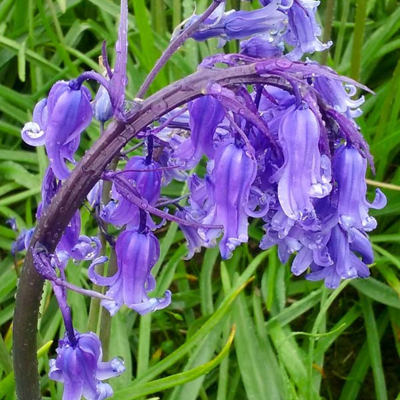
Easily grown from bulbs, Bluebells are ideal to add into woodlands and gardens to create swathes of blue in the Spring. Our stocks are pure British bluebells, carefully selected and lifted under license.
- Flowers: April-June
- Height: 30-40 cms
- Bulb size: 5+cm
- UK native
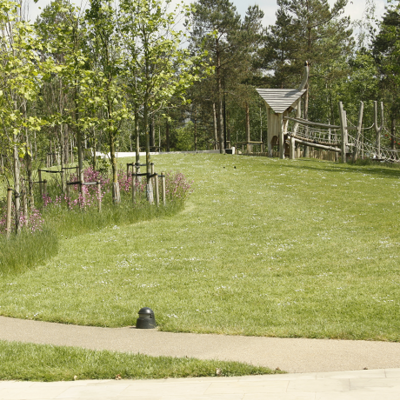

- 80% Grass, 20% Flora - 20 Native wildflower species
- The perfect transition from a monoculture lawn to a biodiverse haven
The perfect transition from a monoculture lawn to a biodiverse haven to support beneficial insects. Our Species Rich Lawn Turf contains 80% grasses to provide excellent cover for a conventional lawn suited to wear and tear as well as being suited to a range of locations including both partially shaded and dry areas.
- Add a valuable source of pollen and nectar to your lawn
- Copes well with shady conditions ...
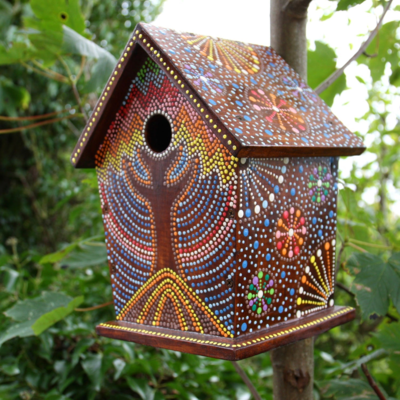
- Carefully Hand-Painted
- Made from Sustainably Sourced Timber
This cosy nest box is the perfect little hideaway for small birds, offering a safe and snug place to roost, rest, and nest from autumn right through to spring! Just in time for raising their hatchlings! Each box is lovingly handcrafted and hand-painted using traditional techniques, and made from sustainably sourced timber, so it’s as kind to the planet as it is to its feathered guests.
- Carefu...
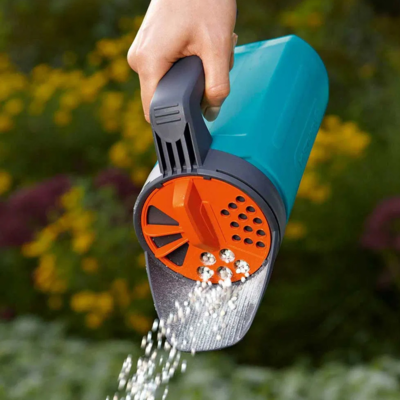
- Easy to use - simply fill and shake!
- Robust and hard-wearing for long-term use
Our easiest to use spreader for simple and accurate application. No assembly required, simply fill and shake. Ideal for patching lawns, spreading wildflower seeds and applying lawn fertiliser. Versatile and lightweight with three flow settings.
- Easy to use - simply fill and shake!
- Suitable for grass seed, wildflower seed and fertilisers
- Robust and hard-wearing for long-term use
- Accurate distribution...

- Even, consistent spreading
- 4 adjustable output settings
This hand‑held seed and fertiliser spreader is an easy, reliable way to apply seed, fertiliser or winter grit across small areas. Lightweight and comfortable to use, it delivers smooth, even coverage.
Key Features:
- Ergonomic handle with balanced weight for comfortable use
- Even, consistent spreading
- Simple hand turning mechanism
- Ideal for areas up to 100sqm
- 4 adjustable output settings
- A...
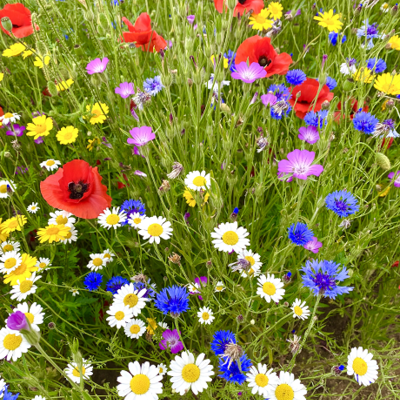
- 5 colourful cornfield annuals - red, blue, purple, white & yellow
- Includes poppy, cornflower, corn marigold, corncockle & corn chamomile
Behold, this boldly-coloured combination of our most popular annual wildflower seeds! The classically-charming Chamomile, the distinct and beautiful blue petals of the Cornflower, bright yellow Marigold wildflowers and rich red Poppies, make for a vibrant palette that works well on its own or bolstering a perennial patch for some first year colour.
- All the flowers in this collection are recommended by the RHS as ‘Perfect for Pollinators’...
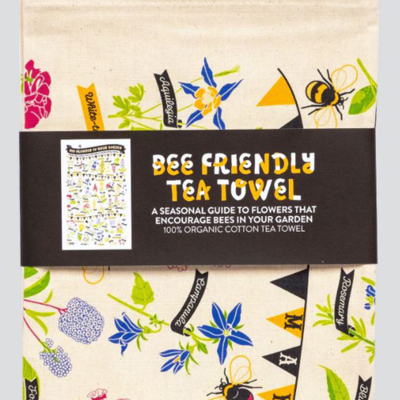
Created using unbleached and organic cotton, this unique tea towel features a guide to seasonal wildflowers perfect for bees and other pollinators - a delightful addition to any kitchen!
Designed and produced in collaboration with Friends of the Earth to increase awareness of the vital contribution bees make to our food supply, economy and quality of life.
- Organic and unbleached
- Size - 48cm...
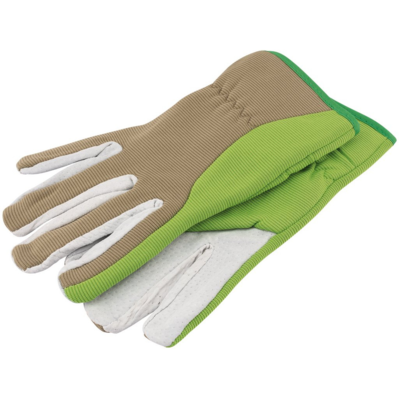
- Medium duty
- Available in 2 sizes
Built for brambles, borders, and everything in between. Tough on the outside, comfy on the inside; perfect for getting stuck in without roughing up your hands! These sturdy gloves are your new garden sidekick, made from tough leather for reliable use, season on season!
- Fantastic all-round protection for gardening tasks
- Breathable elasticated back and open cuffs ensure hands remain comfortable

- Ideal grass to create a wildflower lawn
- Slow-growing, drought-resistant grasses
When you’ve got tricky-to-reach spots or just want to cut back on mowing, our Slow Grow and Wildflower Companion Grass Seed is the perfect fit! This cheerful mix of slow-growing, drought-resistant grasses can be kept neatly short or allowed to stretch out into a relaxed, natural meadow. You can even team it up with wildflowers for an extra touch of colour and charm.
- 25% chewings fescue
- 60%...
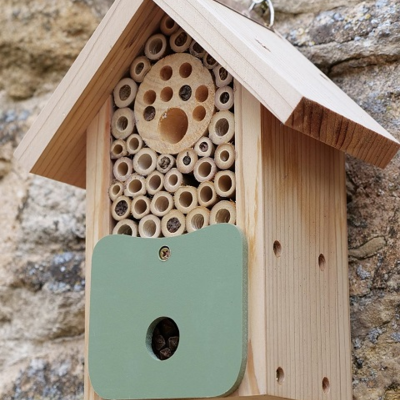
- Safe habitat for all types of bees
- Eecycled swivel door to allow access to the lower compartment
The Bee Barn provides a safe habitat for all types of bees. As well as the bees that love this home you will find that other pollinators find solace in this beautiful barn. Nesting material can be added into the various compartments to help the other pollinators along.
- The bee barn has a recycled swivel door to allow access to the lower compartment
- This is best suited to a south or south-east ...
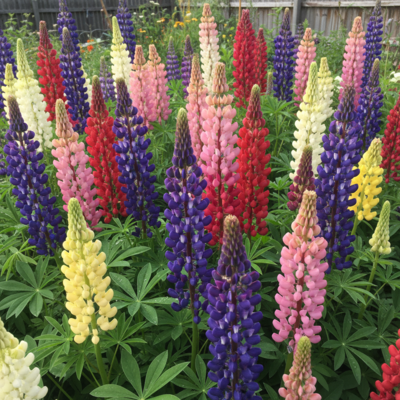
Give your garden a pop of playful color with our Lupin Flower Seed Mix, featuring tall, spiky blooms in cheerful, eye-catching hues! These soil-loving, nitrogen-fixers not only help your garden thrive but give a helping hand to hungry pollinators. Easy to grow and wonderfully dramatic, Lupins add cottage-garden charm and a splash of wow to any border or flower bed.
- A hand-picked mix of nectar-...
Buy With Confidence

Landlife Wildflowers grow and supply high-quality, native wildflower products, restoring wildflowers right across the UK. Working in conjunction with wildlife charity, Buglife, we’re bringing back Britain’s treasured wildflowers! Find out more about why we’ve been trusted by the general public, Natural England and The National Trust for over twenty years.
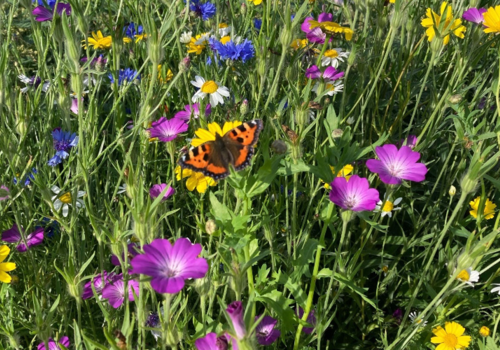
We’re proud to supply only the highest-quality, native wildflower products - tried, tested and refined by us for two decades to ensure each and every customer is delighted with their purchase. Find out more about our commitment to the supply of native, provenance-assured wildflower products to restore Britain’s natural wildflower habitats for bees, butterflies, birds and wildlife.

If you have any questions or would like to get in touch, our team of wildflower experts are on hand to guide you every step of the way. We love talking about wildflowers and the quality of our products, and are pleased to help with any enquiry, including how to establish wildflowers, product recommendations and even creating custom mixtures for specific projects.