If you’re looking for colour this year, you’re approach will likely be different to someone trying to build up a longer-term meadow. The same goes for anyone working with existing wildflower turf compared to a someone starting from scratch.
Unfortunately, there is no single best option for everyone, but Landlife Wildflowers offers several routes to approach your wildflower planting this April, including seed, wildflower plug plants, Yellow Rattle plug plants, and wildflower turf.
Each option comes with its own benefits and is designed to suit a wide range of different spaces and goals. Some are geared towards quicker results, while others towards longer-term establishment.
The Best Wildflower Options to Plant in April
Annual plug plants
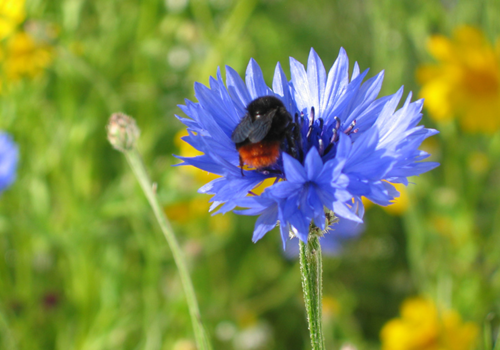
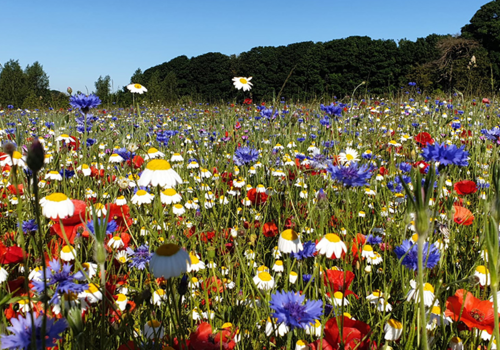
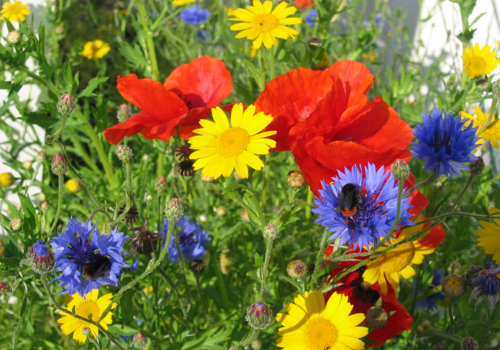
If you want to introduce a bit of colour this year, Annual plug plants are the most straightforward option. Not only do they establish quickly, but they will also flower within the same growing season. Landlife’s range includes species such as poppy, cornflower, corn marigold and corn chamomile, making them a practical choice for borders or smaller areas where you want something that’s quickly visible without having to wait on seed.
Perennial plug plants
Perennial plug plants are suited to planting where the aim is longer-term establishment. They are planted to settle into the ground and return year after year as the planting develops. Included in our range of perennials we can supply native species such as cowslip, which flowers from April to May, along with others like columbine and bluebell that form part of a wider native plant offer.
Yellow Rattle for meadow improvement
Yellow Rattle is used to reduce grass vigour, which creates space for other wildflowers to establish. We supply Yellow Rattle plug plants in spring, and are intended for planting into existing meadows or alongside other wildflower plants to help create a richer and more diverse native habitat.
Wildflower seed and mixtures
Wildflower seed mix is our most flexible option, especially for larger areas or where a new meadow is being created. We offer both individual species and broader mixtures which include annual and meadow-based options. They work particularly well when you’re starting from scratch, ground preparation is key to avoiding patchy results.
Wildflower turf
If you’re after an immediate transformation, Wildflower turf is our fast-track option for a more immediate transformation. Landlife’s Native Enriched Wildflower Turf contains 52 wildflower species which are suitable for both shaded and non-shaded across a wide range of soils.

How to Choose the Right Option for Your Space
The best option really depends on the size of your space and what you’re actually trying to achieve.
For smaller gardens and borders, wildflower plug plants are usually the go to choice as they can be planted individually and positioned exactly where you need them. If the aim is fast visual impact, annual plug plants or wildflower turf will give a more immediate result within the same season.
Where grass is already established, Yellow Rattle plug plants are used to weaken it in order to opens things up so other wildflowers can start to come through.
Larger meadow areas are usually where you would use seed. Wildflower seed mixtures are used to cover large ground and build up a mix over time. Not only is quicker than planting plugs, its also better for longer term establishment, however, care must be taken to ensure that the ground is properly prepared prior to sowing.
If pollinators are your focus, or if this is simply something you would like to introduce into your existing garden or meadow, Landlife offers plug plant species and collections that are known to attract bees and butterflies using native plants suited to this kind of biodiversity.
Mistakes to Avoid When Planting Wildflowers in April
Many problems from planting wildflowers in April arise from choosing the wrong product for the size of your area. Seed is typically used in small borders where plug plants would be easier to manage, while plug plants are commonly used in larger areas where seed would be more practical.
If you’re after instant results from seed alone, you’ll need a quick reality check. Unless your using wildflower turf, your garden or meadow is going to need some time to become established, even in April. In order to speed things up a little, you can always use a mix of both seed and plugs, although the same principle applies and how quickly the plants take will depend on soil and light conditions as well as weather conditions.
One commonly overlooked way to deal with grass vigour is to introduce yellow rattle. The theory behind it is relatively simple as well. Yellow rattle attches to surrounding grasses and steals nutrients from them, which in turn reduces their strength and density over time. As the grass becomes less dominant, additional space and light are created at ground level to allow other wildflowers to establish and develop within the area.
The main mistake to avoid when trying to establish wildflowers is believing the common misconception that a one size fits all approach will work. You need to be a little more strategic in your approach and should aim to be matching specific products to the desired outcomes you’re looking for. Every space is different and needs to allow for varying light, shade and soil conditions. Get it wrong or going with a generic approach will only yield inconsistent or patchy results. Understand what each specific area actually needs and select the appropriate products accordingly.
Conclusion
If you’re planting wildflowers this April, we’ve got several different routes that can help achieve your goals. But what you choose to plant and when, needs to line up with the desired outcome you wish to achieve from your space. If the goal is colour this year, plug plants or turf will get you there quicker. If you’re thinking longer term, seed or perennial planting makes more sense this year, even if it does take a little more time and patience to get that end result.